May
30
2011
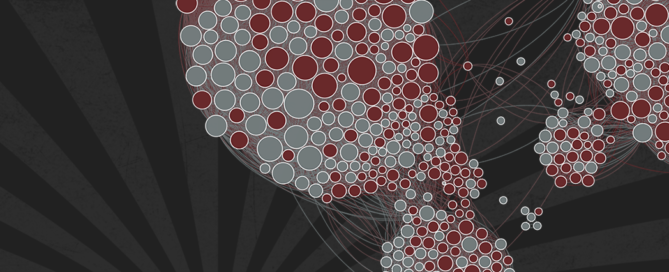
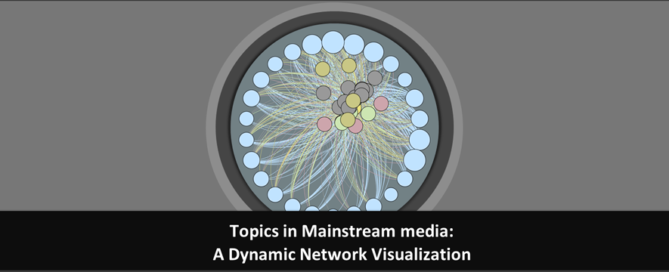
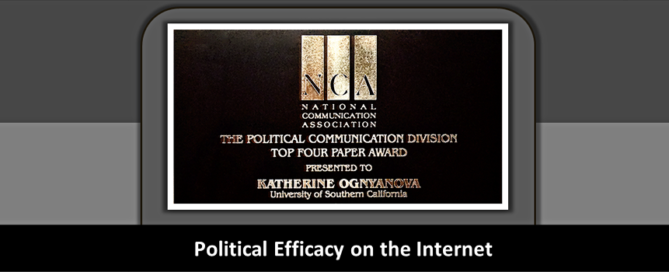
Exploring the structure of relationships between news organizations, issues, and audience members is key to understanding the media system. The paper I’m posting here (just presented at ICA 2011, Boston) looks into a range of network types available to media researchers: inter-organizational, semantic, issue, hyperlink, social graphs. It discusses important predictors of tie formation and dissolution – and the theoretical frameworks that can be used to explicate different structural properties. All of this is partly laying the groundwork for my diss on predictors of content diversity and homogeneity in a media network.
[Update, Jan 2012:] After receiving good feedback at ICA, I solicited Peter Monge‘s agreement to work with me on this project. Over the span of a year, the two of us restructured and entirely rewrote the article. The new version is, if I say so myself, a huge improvement over the ICA draft. It has been submitted to an academic journal and will be posted here after the peer review process has concluded.
(Read the paper abstract below)
“This paper looks into the network mechanisms that underlie the three major parts of a media system: the industry, the content and the audience. It identifies key theoretical frameworks which can explain the formation and dissolution of ties in each of the three areas. The theories and methods outlined in the text are derived from multiple fields: media studies, organizational communication, economics, sociology, and linguistics among others.
The first three sections of the paper outline the main types of networks that can be used to study the media: interorganizational (industry level), semantic (content level) and social (audience level). The last section lists five framework packages (or combined approaches) which, each from its own perspective, can be used to study all three parts of the media system through a network approach.”
Apr
8
2011

The Alhambra project is a collaboration between Metamorphosis and the USC Annenberg Journalism School. The project looks at the potential of new media to promote civic engagement and intergroup interactions. The product of it all – Alhambra Source – is a community news website serving a diverse city in LA County.
The quick visual overview of the project that Nancy Chen and I put together just got the 1st place award in the Social Science category of the GPSS poster competition. Apart from being a nice surprise, this gives us another occasion to suggest that you check out this great research project lead by Sandra Ball-Rokeach and Michael Parks – and the news website managed by Daniela Gerson.

Dec
21
2010
Google’s recent launch of Ngram – a service that shows the frequencies of phrases appearing in indexed books – opened up new possibilities for data exploration fun. A game that data geeks can now play involves comparing the popularity of phrases in books vs. the frequency of their appearance as search terms. Google Insight provides one decent way to trace search term popularity for recent years.
So: what have people deemed worthy of mentioning in books – and what do we search for on the web?
Check out the Ngram & Insight answers for truth vs. beauty, science vs. nature, pen vs. sword, man vs. machine, geeks vs. nerds, Nietzsche vs. God and desire vs. necessity.
Note that there’s a time difference in addition to the difference in medium. The indexed books go from 1500 to 2008; the web search queries – from 2004 to 2010.
[Click on any image to see the full-size version]
Truth and Beauty
Truth wins in books, even as people search the Web for beauty:

Continue reading
Sep
19
2010
This semantic map takes a cue from Chris Anderson‘s The-Future-of-Journalism visualization post @ Nieman Lab. CWA makes the fair point that any time we see a dramatic event / scientific discovery /technological innovation occurring, someone will invariably cry out “Oh, but what could that possibly mean for journalism?”.
The network below is based on data from online sources that have posted their musings on the future of news in the last 3 years. The texts were compiled with the help of LexisNexis – the corpus included all articles from web sources mentioning “future of journalism” or “future of news” between 2008 and 2010. I used WordIJ to compile the semantic net (Gephi’s great AlchemyAPI plugin sadly does not seem to work for me on Windows 7). The visualization of the top ~100 terms was done in Gephi.
(click on the image below for full size view)